Noh | Culture | Miyajima Tourist Association




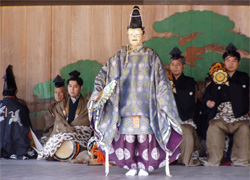
Motonari Mori who won against Sue's forces in the Battle of Miyajima "Itsukushima Kassen" in 1555 (the first year of Kohji) started the noh play of Itsukushima. It has been preformed frequently since 1563 (Eiroku 6).
When the master of Kanze school traveled to Itsukushima in 1568 (Eiroku 11), he noted "They got nine pieces of noh play on the stage on water. Then they played eleven pieces on the stage set in the villa of Tanamori Fussaki." in the Fusaaki's Account.
After the Battle of Sekigahara, Fukushima took place of Mori, and became the feudal lord of Geibi. The Miyajima Magistrate, the Miyajima Financial Manager and the Miyajima Accountant of the feudal clan, had established direct control in Itsukushima since they became the followers of Asano from Kii Province in 1619 (Genna 5). It came to take on the character of a sightseeing spot around the Shinto shrine with the development of transportation network. Miyajima got more and more lively. Markets were opened in seasons of spring, summer, and autumn, and noh was performed throughout the times of Fukushima and Asano.
The festivals came to be scheduled in the new calendar after the Meiji era. Spring Omiya festival was named "Toka Festival" and it was held from April 15, which was one month later than March 15 in the traditional calendar. Shin noh (noh play) in the Toka Festival was assumed to be performed for three days from starting the 16th.
Okina is played at the beginning of the opening day and the third day. The authentic five pieces of noh play are performed for these three days. Also, kyogen plays are included in-between. You can appreciate the traditional noh play from the Edo era.
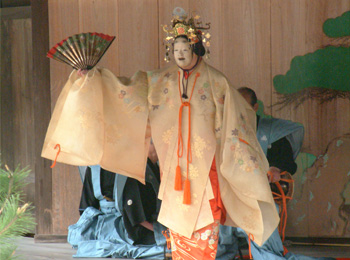
Shin-noh, Hagoromo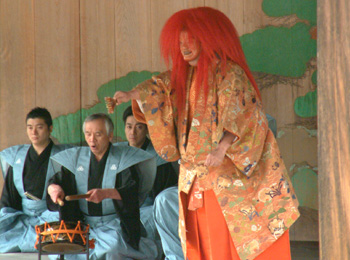
Shin-noh, Shojo
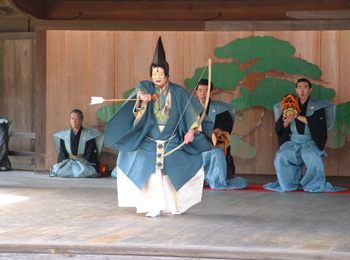
Shin-noh, Kagetsu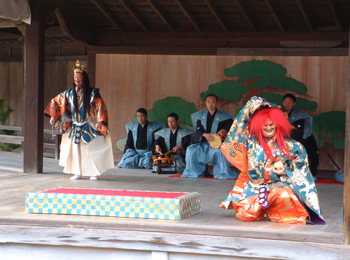
Shin-noh, Shari